
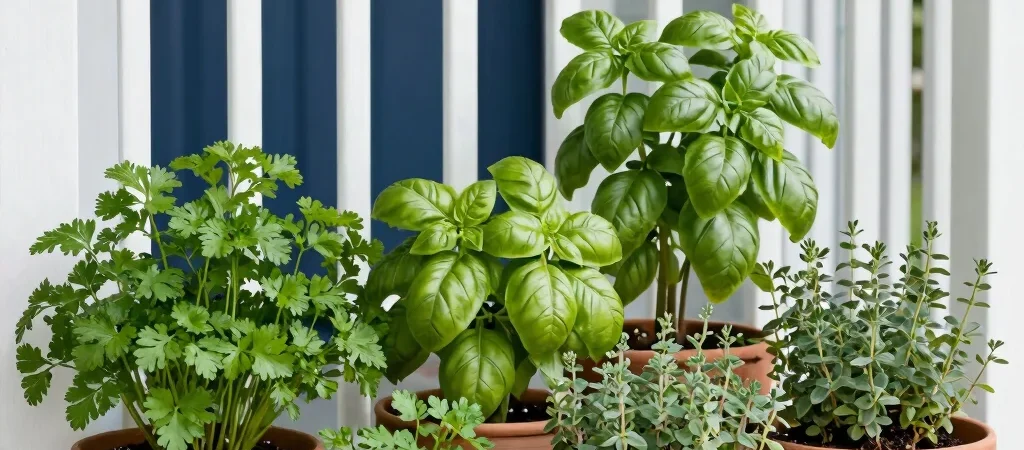
A pot of herbs is most useful when it is close enough to snip on the way back from the grill or while dinner simmers. That makes a porch step, patio edge, or sunny kitchen landing a better starting point than an ambitious row at the far end of the yard. Choose the spot around your routine, then match the plants to its conditions.
Watch the sun before planting
Notice how many hours of direct sun the spot receives and whether a roof, fence, or neighboring building shades it as the day moves on. Basil generally prefers warmth and plenty of sun, while parsley can tolerate a little less direct light. Local climate and the season matter, so check plant labels and your regional growing guidance before choosing.
Give roots room to drain
Use a container with drainage holes and set it where excess water can escape without staining a wood porch or pooling beside the foundation. A potting mix made for containers is usually a better fit than dense garden soil, which can hold too much water in a pot. Choose a container large enough for the plants to grow rather than crowding several herbs into a tiny decorative vessel.
Plant for the meals you make
If you reach for tomatoes, basil and parsley may earn their space; if you cook beans or roasted vegetables often, thyme can be handy. Start with two or three herbs you already use instead of planting a full assortment that needs attention. Put taller plants where they will not shade shorter ones, and leave enough room to harvest without knocking the pot over.
Keep watering easy to remember
Containers dry faster than garden beds, especially in hot, windy weather, so check the soil regularly rather than relying on a fixed calendar. Water when the top layer is dry, then let excess drain away; the right rhythm will vary with the pot, weather, and plant. Keep the watering can nearby, and the garden is more likely to become part of the day instead of another chore.